Categories

My Accidental Journey into Creative Textiles

If you’d told me years ago that my creative textiles journey would lead me to teaching for a living… I would never have believed you. In fact, I didn’t even know what stitched textiles meant when I first enrolled on my HND course. I simply knew one thing: I needed to escape my pensions job and find something creative, something hands‑on, something that felt like me.

The title of the course was ‘Stitched Textiles and Fashion’. At the time, I imagined the course would be mostly fashion, pattern cutting, and garment construction – a practical route into a new career. What I didn’t realise was that signing up for that course would open a door I didn’t even know existed.

It would lead me into the world of creative textiles.

Starting with No Art Background at All

I’ll be honest: I had virtually no art experience. Not at school. Not at home. Not anywhere.

I wasn’t one of those people who grew up sketching, painting, or filling notebooks with ideas. I didn’t think of myself as “creative”, and I certainly didn’t think I had any artistic ability. Even now, I still feel that gap sometimes.

But that’s exactly why creative textiles spoke to me.

Because suddenly, creativity wasn’t about drawing. It wasn’t about being able to sketch a perfect figure or paint a realistic landscape. Instead, it was about:

  • texture
  • colour
  • layering
  • mark‑making
  • experimentation
  • letting materials guide you

For the first time, I realised that creativity could come from your hands, not your pencil.

Discovering Stitched Textiles – and a New Way of Seeing

When the course began, I quickly discovered that stitched textiles was a completely different world from dressmaking. It was expressive, tactile, and wonderfully freeing. Instead of following patterns, I was encouraged to explore surfaces, create textures, and experiment with stitch as a form of drawing. I learned the wonderfully-tactile craft of wet-feltmaking. We learned how to colour our own fabrics using Procion dyes and add pattern with printing inks. And the absolute revelation for me: Free-Motion Embroidery! My life hasn’t been the same since.

A huge part of that shift came from being taught by Rosemary Campbell (Rose) – already a renowned textile artist at the time, and now a nationally (and arguably internationally) recognised figure. She’s a founding member of EDGE Textile Artists Scotland, a member of the Textile Study Group, and an influential voice in contemporary stitched textiles.

Learning from Rose was transformative. She didn’t just teach techniques – she taught ways of seeing. She showed us how stitch could be expressive, how fabric could hold emotion, and how creativity could grow from curiosity rather than confidence.

How Free‑Motion Embroidery Transformed My Creative Textiles Journey

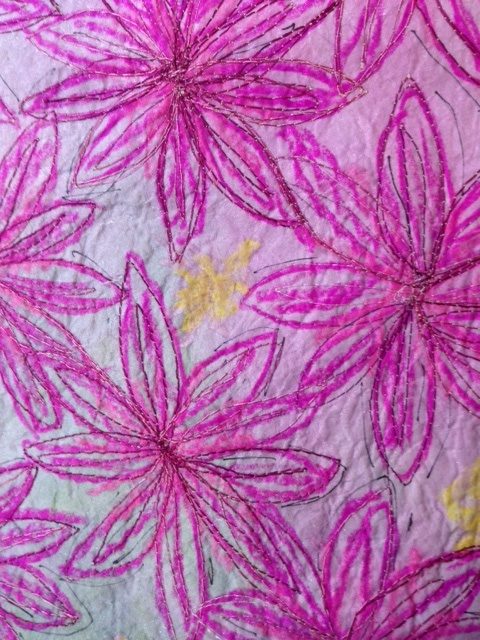
When I first discovered Free‑motion embroidery, it was a revelation. It felt like sketching with thread – fluid, intuitive, and forgiving. I was hooked. Using a sewing machine as a creative tool had never occurred to me before. I began to understand that textiles could be a medium for art, not just a material for clothing. That shift changed everything for me.

Creativity as a Practice, Not a Talent

One of the most important lessons I learned was this: creativity isn’t something you’re born with – it’s something you grow.

You don’t need formal art training. You don’t need to be able to draw. You don’t need to know the “rules”.

You just need curiosity, a willingness to play, and the courage to try.

That realisation shaped not only my own practice, but also the way I teach.

Why I Design Workshops for People Like Me

Because I didn’t come into creative textiles with confidence, I understand exactly how intimidating it can feel. That’s why my workshops are designed for people who:

  • think they “can’t draw”
  • feel they’re not artistic
  • want to be creative but don’t know where to start
  • prefer hands‑on exploration to traditional art techniques

My aim is to create a space where anyone can discover the joy of creative textiles – without fear, pressure, or perfectionism.

If you can hold a needle, you can make something beautiful. If you can stitch a line, you can create art. If you can play, you can create.

If you’re completely new to sewing, my Beginners Sewing Classes are a gentle, confidence‑building way to learn how to use a sewing machine before exploring creative textiles.

A Creative Life I Never Expected

Looking back, enrolling on that HND course was one of the best decisions I ever made — even if I didn’t fully understand what I was signing up for at the time. It led me into a world of colour, texture, and expression that I didn’t know I needed.

It gave me a creative life. It gave me a community. And it gave me the chance to help others discover their own creative spark.

Begin your own Creative Textiles Journey

If you’re standing where I once stood – longing for something creative, unsure where to begin, convinced you “can’t draw” -then you’re already on your way. Creative textiles has room for you, just as it had room for me.

You’re always welcome to join me in the studio and start your own creative textiles journey.

If you’d like to explore free‑motion embroidery – the gateway skill that opens up the whole creative textiles journey – my online course ‘Expressive Free-Motion Techniques‘ lets you learn at home, in your own time, with clear, encouraging lessons you can pause and revisit whenever you need.

I founded Artisan Stitch because I wanted to create the kind of learning space I wish I’d had when I was starting out — a place where ordinary sewers could discover that creativity isn’t reserved for artists, and that sewing is so much more than taking up hems. The name reflects that belief: artisan for the joy of making with your hands, and stitch for the simple act that begins every creative textiles journey. I’m proud that this approach has been recognised with awards for Best Creative Workshops, but what matters most to me is helping people move from basic skills into expressive, imaginative textile work, and showing them that they’re far more creative than they ever believed.

Links:
EDGE Textile Artists Scotland

Textile Study Group

share:
Categories

Sewing for Mental Health: How Stitching Supports Your Wellbeing

“Sewing for mental health” might sound like a trend, but in truth, it’s a time-tested way to improve emotional wellbeing, build resilience, and connect with others through creativity.  In the hustle and bustle of everyday life, it’s easy to forget to take time for yourself. But carving out a little space in your week to sew can do far more than help you finish that cushion cover or shift dress — it can have a profound impact on your mental and physical wellbeing.

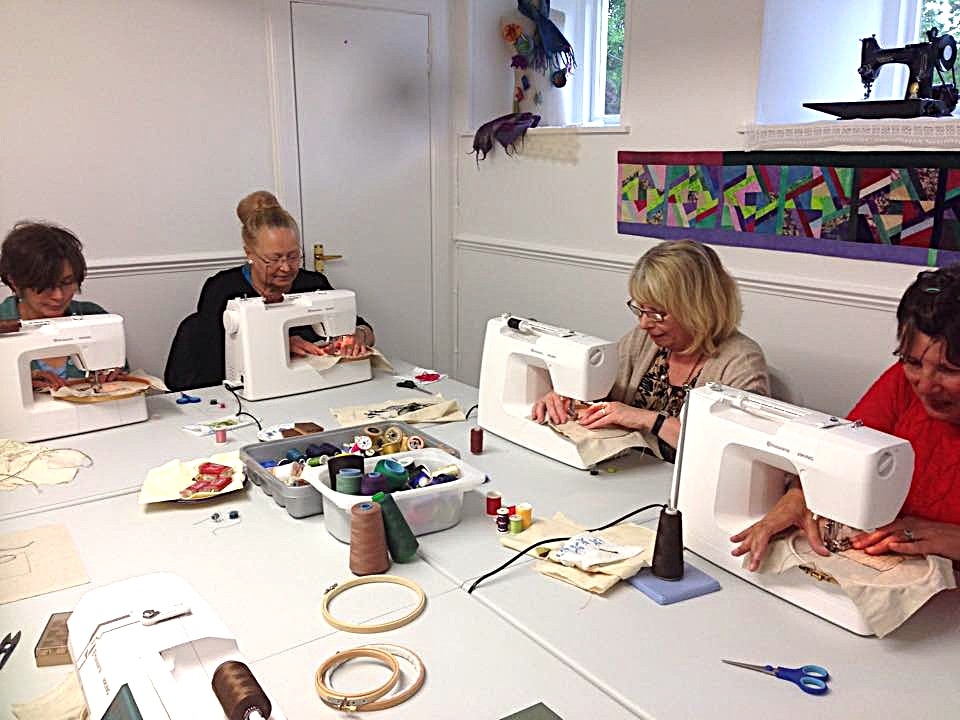
At Artisan Stitch in Edinburgh, we see it every day. Our sewing classes aren’t just about learning to thread a machine or perfect a French seam — they’re little pockets of calm, creativity, and community. Here’s why sewing is so good for the soul.

share:
Categories

Free Motion Machine Embroidery class

Free‑Motion Embroidery Masterclass: A Day of Creativity, Confidence and Play

There was a real buzz in the studio today as we held a full‑day Free‑Motion Embroidery Masterclass — my very first event of this kind, and what a joy it was. Free‑motion embroidery is one of my favourite techniques to teach because it’s wonderfully freeing. You don’t need to be able to draw, paint or have any formal art skills. Once the feed dogs are lowered and the fabric can move freely under the needle, it becomes all about simple movement, texture and expressive stitching.

This workshop was designed especially for people who want to explore textile art in a relaxed, supportive way — even if they don’t think they’re “creative”.

Learning the Basics: Making Marks With Thread

We began the morning by exploring how to set up the machine for free‑motion work and how to move the fabric smoothly. Instead of thinking about “drawing”, we focused on making marks, building textures, and getting comfortable with the flow of the machine.

Each student created a stitch sampler, experimenting with:

  • wiggly lines
  • loops
  • shading effects
  • tiny textures
  • layered thread patterns

These samplers become a personal reference guide — a little library of stitches you can return to again and again.

Exploring Water‑Soluble Fabric: Creating Thread Lace

Next, we moved on to one of the most exciting techniques of the day: making lace from thread using water‑soluble fabric. It always feels a bit magical. Students stitched their designs into the stabiliser, then dissolved it away to reveal delicate lace made entirely of thread.

There were lots of delighted “Oh wow!” moments — my favourite part of any workshop.

Afternoon Project: A Woodland Scene in Textured Stitching

In the afternoon, we brought everything together in a woodland scene project. This included an introduction to my own version of drawn‑thread‑style stitching, which creates beautiful tree‑like textures without needing any drawing skills at all.

Students combined:

  • free‑motion mark‑making
  • textured threadwork
  • lace elements
  • soft shading

The results were stunning — each piece completely different, each one full of personality.

Students comments include:

“I loved the Free-motion embroidery class. Great fun and amazing what you can produce” -Fiona L.

“Thanks you Jen for your skills and patience.  Had a fabulous day” -Sally L.”

” I had a fab time Jen. The pace was just right and I had lots to show my family…”  -Carol D.

Their enthusiasm is exactly why I teach.


A Wonderful First Event — With Many More to Come

This masterclass was a milestone for me — my first full free‑motion embroidery event — and I couldn’t have asked for a better group. Watching students discover what their machines can really do, and seeing their confidence grow throughout the day, is always a privilege.

If you’d like to explore free‑motion embroidery yourself, keep an eye on my textile workshop calendar. I run regular sessions for beginners and improvers, and my Expressive Free‑Motion Techniques online course is available anytime if you prefer to learn at home.

share:
Categories

Open Studio event on Saturday

Open Studios at Cockenzie House: A Day of Creativity, Curiosity and Sewing Fun

Thank you so much to everyone who came along to the Open Studio event at Cockenzie House and Gardens on Saturday. It was a wonderfully busy day with a steady stream of new faces exploring the building, chatting to the artists and makers, and discovering just how much creativity happens behind these doors.

Cockenzie House is home to an amazing mix of talent — artists, furniture upcyclers, glass and jewellery makers, textile artists, health practitioners and even musicians. It was lovely to see the whole building come alive, with every studio open and everyone demonstrating their skills.

The Famous “Sewing Machine Driving Test”

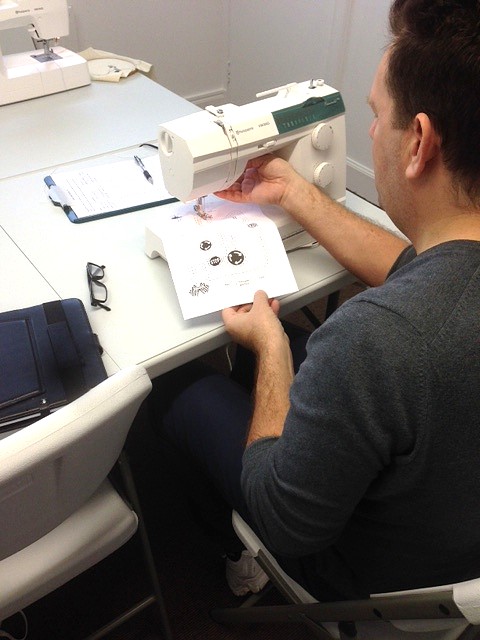
One of the highlights of the day (for me and for the spectators!) was my Sewing Machine Driving Test. Several brave visitors stepped up to the challenge, and it provided plenty of amusement. The test involves a series of simple manoeuvres designed to help people feel more confident at the machine — steering, stopping, starting and controlling speed.

I’m pleased to report that everyone passed, and there were no stitched fingers, which is always a bonus. Perhaps the popularity of The Great British Sewing Bee has encouraged more people to give sewing a try — it was especially nice to see a few chaps taking an interest too.

Lots of Interest in Summer Workshops

There was a great deal of enthusiasm for my newly released programme of sewing classes and textile art workshops. These run throughout July and August – perfectly timed for the summer holidays. Whether you’re a complete beginner or looking to build on your existing skills, there’s something for everyone.

Workshops include:

  • Beginners Sewing
  • Advanced Dressmaking Techniques
  • Pattern Cutting
  • Textile Art sessions
  • Creative summer projects

I loved chatting to so many people who were excited about learning something new. Many were also interested in returning to sewing after a long break. So go on, give it a go. My ‘not just for BeginnersBeginners courses are popular amongst returners too. They’re an excellent re-introduction if you’ve got a bit rusty, or you have gaps. Around half of the students on those courses are ‘returners’.

My Summer Schools run only in July and August, so if you fancy a creative day out over the holidays, you can see what’s on here. And if you’d like to join me at any other time of year, my regular sewing classes and textile art workshops are all listed here.

share: