A Guide to Sewing Machine Presser Feet and Accessories
Sewing machine presser feet are designed to make every sewing task easier. Each one has a specific purpose, and using the right foot can dramatically improve your stitch quality, fabric handling, and overall enjoyment of sewing. If you’ve ever wondered why your fabric pulls, puckers, or refuses to behave, the answer is often as simple as switching to the correct presser foot.
When you first unpacked your sewing machine, you probably found a little bag of mysterious metal and plastic attachments. Many sewists tuck them away and never look at them again — and then struggle on with the wrong foot for the job. Even the most basic machines usually come with two or three extra feet, and many more can be purchased inexpensively from your local dealer. A small investment in the right accessories can save you hours of frustration and give your sewing a more professional finish.
Some feet are universal and will fit a wide range of machines, while others are brand‑ or model‑specific. Always check compatibility before attaching a new foot, as using the wrong one can damage your machine.
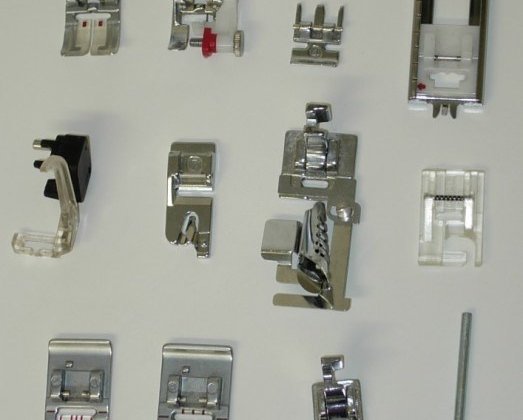
The photograph shows a selection of common presser feet and accessories for a Pfaff Creative 1475. Your own machine may include similar items.
Common Sewing Machine Presser Feet (Left to Right, Top to Bottom)
Standard Sewing Foot
The basic foot for straight stitching and general sewing. It’s the one most machines come fitted with.
Blind Hem / Overlock Foot
This versatile foot has an adjustable guide to help you line up the fabric edge. Uses:
- Neatening raw edges with zigzag or overlock‑style stitches
- Sewing nearly invisible hems on trousers, skirts, and home décor
Zipper Foot
A staple accessory that allows you to stitch neatly down either side of a zip, close to the teeth. Uses: dressmaking, bags, cushions, and anything requiring a zip.
Buttonhole Foot
Most machines — even budget models — include a buttonhole foot. Depending on your machine, you’ll have either a one‑step automatic buttonhole or a four‑step manual version. Uses: shirts, dresses, waistbands, and children’s clothing.
-
Darning / Free‑Motion Foot
Used with the feed dogs lowered (or covered). Uses:
- Darning repairs
- Free‑motion embroidery
- Thread sketching
- Quilting It’s not strictly essential, but it keeps your fingers safely away from the needle and gives better control.
Rolled Hem Foot
Helps fine fabrics curl into a tiny rolled hem as you sew. Uses: lightweight fabrics, scarves, blouses, and delicate dressmaking.
Bias Binder Foot
Less common, but handy if you use a lot of bias binding. It applies binding in one step. Uses: aprons, quilts, armholes, necklines.
Flat‑Fell Foot
Not usually supplied as standard, but useful if you want to create professional flat‑felled seams. Uses: jeans, shirts, and durable garments.
Try Them Out — Your Machine Can Do More Than You Think
If your accessory bag has been gathering dust, now is the perfect time to explore it. Grab your instruction manual and some scrap fabric, and spend an hour experimenting with each foot and your machine’s stitch settings. You’ll quickly discover new techniques, better finishes, and maybe even a few creative possibilities you didn’t know your machine had.
Sewing becomes far more enjoyable when your tools are working with you, not against you.
If you’re now looking at your accessory bag with fresh eyes, come and learn how to use these feet properly. My Beginners Classes cover zips, buttonholes, blind hems and edge finishes, and my Dressmaking Courses build on these skills for garment‑making. And for the creative side of sewing, the free‑motion/darning foot is the star of my Free‑Motion Embroidery Workshop and online course ‘Expressive Free-motion Techniques‘.